

Socket programming in PHP
Sockets let client and server processes communicate. This introduction builds a PHP server that receives a string and returns it reversed.


Introduction
Sockets enable communication between processes, often in a client-server model. A client and a server need a connection to exchange data; socket programming establishes that connection.
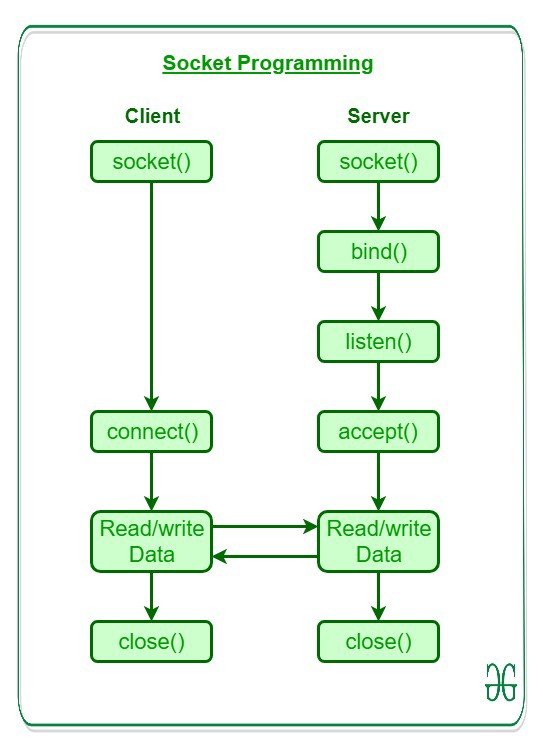
Code example
Build a server that receives a text message from a client and returns the same message in reverse.
SERVER PHP
1. Set the host and port variables.
$host = "127.0.0.1";
$port = 5353;
// No Timeout
set_time_limit(0);
2. Create the socket.
$socket = socket_create(AF_INET, SOCK_STREAM, 0) or die("Could not create socket\n");3. Bind the socket to the host and port. The socket is associated with the chosen IP address and port number.
$result = socket_bind($socket, $host, $port) or die("Could not bind to socket\n");4. Listen for incoming connections. After binding, the server waits for a client.
$result = socket_listen($socket, 3) or die("Could not set up socket listener\n");5. Accept an incoming connection. The accepted connection produces a second socket, stored in $spawn, for communication with that client.
$spawn = socket_accept($socket) or die("Could not accept incoming connection\n");6. Read the message from the client socket.
$input = socket_read($spawn, 1024) or die("Could not read input\n");7. Reverse the message.
$output = strrev($input) . "\n";8. Send the response to the client socket.
socket_write($spawn, $output, strlen ($output)) or die("Could not write output\n");Close the sockets.
socket_close($spawn);
socket_close($socket);
Share
What's Your Reaction?
 Like
0
 Dislike
0
 Love
0
 Funny
0
 Angry
0
 Sad
0
 Wow
0


